


Shaping Uganda’s fiscal policies from a people centered perspective
ABOUT CSBAG:
Since 2004, the Civil Society Budget Advocacy Group (CSBAG) has continued to bring together Civil Society Organizations (CSOs) at national and district Levels to influence Government decisions, on resource mobilization and utilization for equitable and sustainable development. CSBAG has a membership of 100 CSOs with 45% of these from the sub national level.
HOW WE WORK
CSBAG works through an outreach structure from grassroots to the National level. In the districts of Kibaale, Abim, Agago, Sheema, Rubanda, Kanungu, Bushenyi, Pader, Budaka, Kakumiro, Kabale and Kibuku 1200 citizens are organised into Participatory Budget Clubs that engage the planning and budget process at the lower local governments.
CSBAG members work through 10 Thematic Working Groups of Health, Education, Agriculture, Energy, JLOS, Accountability, Roads, Trade and Tourism, Water and Environment, Social Development to ensure National resource allocation, mobilization and utilization is people centred and gender sensitive.
In 2017, CSBAG established 9 Regional Budget Coalitions (RBCs) composed of CSOs operating in the regions of Kigezi, Bukedi, Sebei, Soroti, Bugisu, Busoga, Bunyoro, Tooro, and Ankole. This is part of our broad objective of increasing representation as well as consolidating the subnational CSO voice and action across the country for a people-centred budget. Through these RBCs, CSBAG for the first time mobilised 127 sub-national CSOs from 61 districts to engage various budget advocacy interventions in 2017.
CSBAG in 2016 partnered with like-minded MPs and established a Parliamentary Forum on Public Finance Management to have Uganda’s Parliament at the forefront of supporting prudent Public Finance Management reforms.
OUR FOOTPRINT:
Since 2004, CSBAG’s footprint can be traced at National level in public campaigns on promoting budget literacy, gender and equity responsive budgeting, climate change financing, Strengthening Local Government resilience for Disaster Risk Management, public campaigns on tax policies among others at the Local Government our footprint is in over 40 Local Government districts, where CSBAG mobilized and organized citizens into PBCs.
DELIVERY MODEL
Capacity building and technical assistance: CSBAG provides holistic capacity strengthening to civil society organisations, citizens, CSOs, and policymakers to enable them effectively to interrogate public finance management and ensure national resource allocation, mobilisation, and utilisation are people-centred and gender-sensitive.
Participatory Planning and Budgeting: Through the Participatory Budget Model, CSBAG mobilises citizens to ensure the budget‑making process in Uganda is participatory, and citizens’ concerns are prioritised in the budget through the Participatory Budget Clubs (PBCs). It also mobilises citizens to undertake budget monitoring and service‑delivery tracking in social sectors, including the health and education sectors (see Health Sector Monitoring Tool Document (link) and Education Sector Monitoring Tool Document (link)). Since 2004, CSBAG’s footprint can be traced in 34 districts, where CSBAG mobilised and organised citizens into PBCs. To enhance inclusion, the PBCs target having at least 40% of the participants be women, youth, or persons with disabilities, among others.
Participatory Planning and Budgeting: Annually, CSBAG mobilizes its members to engage the government budget process where they present position papers aimed at influencing priority setting from people centered and gender perspective. Spaces occupied include the local government consultations where CSO Position Papers are presented:
- 25-26 LGBC CSO presentation MASAKA
- CSBAG – PNF Gulu II Presentation
- CSBAG presentation
- 17th September 2024 Presentation at LGBC in Jinja 1 t0 20th September 2024 by Basil Wabugoya Wanzira
- Karamoja Summary
- LACSON CSOs POSSITION PAPER 2024-2025 BUDGET CONFERENCE
- LGBC CSO presentation_ Fort Portal 19-20-09
- LGBC CSO presentation Mbarara II Las Vegas Hotel
- LGBC Presentation HOIMA CITY
- LGBC PRESENTATION MASAKA II
- Lira II AMACOD Presentation
- Presentation at LGBC in Jinja 1 on 20th Sept 2024 by Basil Wanzira
, district and subcounty conferences as well as parliament budget hearings.
Structured Collaboration to Influence Policy: CSBAG works with members organised into 10 Thematic Working Groups to garner a collective voice amongst CSOs and pursue structured collaboration with the government for prudent public finance management. In 2017, CSBAG established nine Regional Budget Coalitions (RBCs) composed of CSOs operating in the regions of Kigezi, Bukedi,Sebei, Soroti, Bugisu, Busoga, Bunyoro, Tooro, and Ankole. This is part of our broad objective of increasing representation as well as consolidating the subnational CSO’s voice and action across the country for a people-centred budget. This is part of our broad objective of increasing representation as well as consolidating the subnational CSO’s voice and action across the country for a people-centred budget.
On the government side, CSBAG is a member of the Public Finance Management Committee, Gender and Equity Taskforce, Presidential Advisory Committee on the Budget, Budget Transparency Initiative, and Budget Monitoring and Accountability Unit chaired by the Ministry of Finance. CSBAG in 2016 partnered with like-minded MPs and established a Parliamentary Forum on Public Finance Management in Parliament. In 2019, working with likeminded CSOs in the East African region, we established the East African Budget Network to promote prudent public finance management within EAC countries.
Policy Research and Analysis: CSBAG conducts extensive research and analysis on and generates policy options for government attention. Some of the available literature includes (i) a citizen budget containing alternative budget proposals produced every financial year.
Media Advocacy: Externally, CSBAG works strategically with media on public campaigns to rally citizens to participate in the budget process and enhance budget literacy; undertake investigative journalism on specific budget advocacy aspects;
Stories of Change
ACHIEVEMENTS REGISTERED SO FAR…
Influencing National and Local Government Budgets
Every financial year, CSBAG mobilises CSOs to contribute to shaping national budgets from a pro-people and gender perspective. CSBAG has indeed re-directed the position of the government on key budget issues that concern ordinary citizens in the national budget. In conformity with this, for the last 11 financial years (FY 2014/15–FY 2023/24), CSO alternative budget proposals were made to the government, and 353 were fully adopted by the Parliament of Uganda. The overall alternative budget proposal uptake by Parliament over the years is 28%. (See table for more.)
Building linkages for effective citizen led advocacy
CSBAG works to increase synergies amongst CSOs at the national and local level for a stronger collective voice on people-centred resource allocation and utilisation. In 2015, CSBAG worked with its members across the country to mobilise over 4 million signatures from petitioners who petitioned the Speaker of Parliament, causing Parliament to reject the government’s proposal to tax agricultural inputs.
Strengthening CSO linkages and collaboration with Government at National and Local Level
To date, CSBAG is a member of nine government public finance management bodies at national and local levels. We have utilised these spaces to bring to the fore the citizens’ voice on public finance management issues. Still, our respective strategic engagements with local governments, the IMF, and the World Bank on initiatives around public expenditure management and fiscal transparency continue to improve.
Learning for effective budget advocacy Learning:
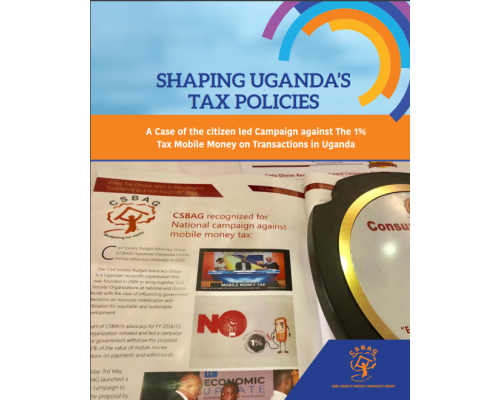
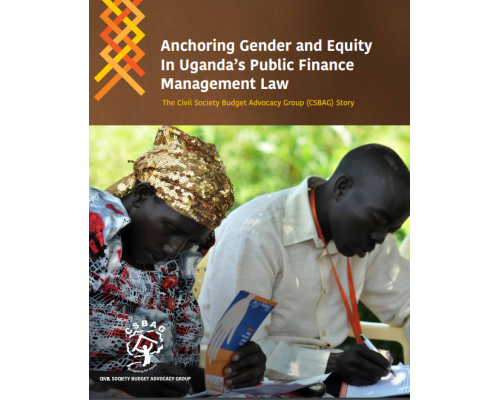
For learning and adaptation, there are at least 10 externally published case studies on CSBAG work by governments, independent researchers, and development partners. These include 1 case study on gender-responsive budgeting, 4 case studies on the CSBAG campaign not to tax agriculture inputs, and 5 case studies on the CSBAG campaign not to tax Mobile Money transactions.
Enhancing Citizens Participation in budget accountability work
Citizen Involvement in the budget process is critical to ensuring that services that are due to them are provided in the right quantities, quality and time. Through the CSBAG Participatory Budget Club (PBC) model, citizens citizens have ably engaged duty bearers on improved service delivery from the duty bearers. See the graph below for more details.
| Financial Years | Adopted budget proposals | Submitted CSBAG proposal | % rate |
| FY 2014/15 | 35 | 77 | 45 |
| FY 2015/16 | 35 | 90 | 39 |
| FY 2016/17 | 35 | 80 | 44 |
| FY 2017/18 | 47 | 91 | 52 |
| FY 18/19 | 23 | 169 | 14 |
| FY 19/20 | 40 | 137 | 29 |
| FY2020/21 | 39 | 181 | 22 |
| FY 2021/22 | 27 | 138 | 20 |
| FY 2022/23 | 30 | 157 | 19 |
| FY 2023/24 | 18 | 100 | 19 |
| FY 2024/25 | 24 | 50 | 48 |
Key public finance management policy changes CSBAG contributed to over the years
Making tax policies fair and equitable
| Financial Year | Tax Campaign Issue | Campaign Outcome |
| FY 2018/19 | Government to drop 1% tax on Mobile Money transactions (Sending, Receiving and Withdrawals) in Excise duty (Amendment Bill, 2018 | Government adjusted tax to 0.5% only on withdrawals |
| FY 2014/15 | Government to drop 18% VAT on agriculture inputs in VAT (Amendment) Bill, 2014 | Tax Proposal withdrawn by Government |
| FY 2016/17 | Government not to exempt Members of Parliament from paying tax on their allowances (Income Tax (Amendment) Bill, 2016) | Tax Proposal stayed by Government |
| FY2012/ 13- to date | Improving Legal Framework | 2012-2015: Spearheaded CSO input in the PFM Bill, 2012. This led to incorporation of Certificating of Gender and Equity in the Public Finance Management Act, 2015, imposing restrictions on supplementary budgeting, putting a cap on contingency funding. 2017: As a member to the PPDA Act, 2003 Review Task Force, CSBAG officially submitted input on procurement glitches especially reducing on the procurement time in 2017. |
| FY2018/19-FY2020/21 | Enrolling Local Governments on Government Procurement Portal | 2021: Buliisa and Rakai District Local Governments were enrolled onto the GPP in June 2021. |
| FY2013/14 to date | Budget Transparency and participation | MoFPED institutionalized budget transparency and accountability through the following initiatives: a) 2013-Launch of the Budget Transparency Initiative, b) 2015– started Quarterly Release Media Briefings c) and the development of the Citizens’ Guide to the Budget, d) 2018-Opening budget spaces for Non-State Actors to engage the Local Government Budget Consultations |
| FY2014/15 | Direct Transfer of Funds to Schools and Health Centers | Since FY2014/15, Ministry of Finance introduced fund disbursement directly to Schools and Health Centers directly to eliminate associated delays. |
| FY2019/20 | MPs illegally allocating themselves UGX 10bn for COVID Relief contrary to Article 93. | H.E. the President of Uganda issued a directive to the Speaker of Parliament on 28th April 2020, recalling the money MPs had illegally allocated themselves. |
| FY2020/21 | Refocusing the FY2020/21 National Budget to promote allocative efficiency & respond to COVID-19. | CSBAG was co-opted on taskforce undertaking this assignment and UGX3 trillion was saved. This practice was adopted by Government since FY2020/21 to date. |
| FY 2014/15-FY2017/18 | Reforms in the planning and budgeting approach of Government | CSBAG in 2017 assessed the pilot of PBB in collaboration with MFPED, which informed the PBB scale up to all MDAs and Local Governments |
| Climate Finance legal framework and easy tracking and reporting on Uganda’s climate | Climate Change Act passed with mandatory clause to plan/budget for CF MoFPED in FY2022/23 created 2 outputs in the IFMIS on i) climate change adaptation and ii) climate change mitigation | |
| FY2019/20 to date | Reducing the bloated Public Administrative costs | In the National Budget Strategy FY 2018/19, the government committed to restructure all agencies with similar mandates. Cabinet in FY2023/24 approved a 2-year implementation roadmap that saw Public Service actualising this process through the Rationalisation of Government Agencies and Public Expenditure (RAPEX). |


